

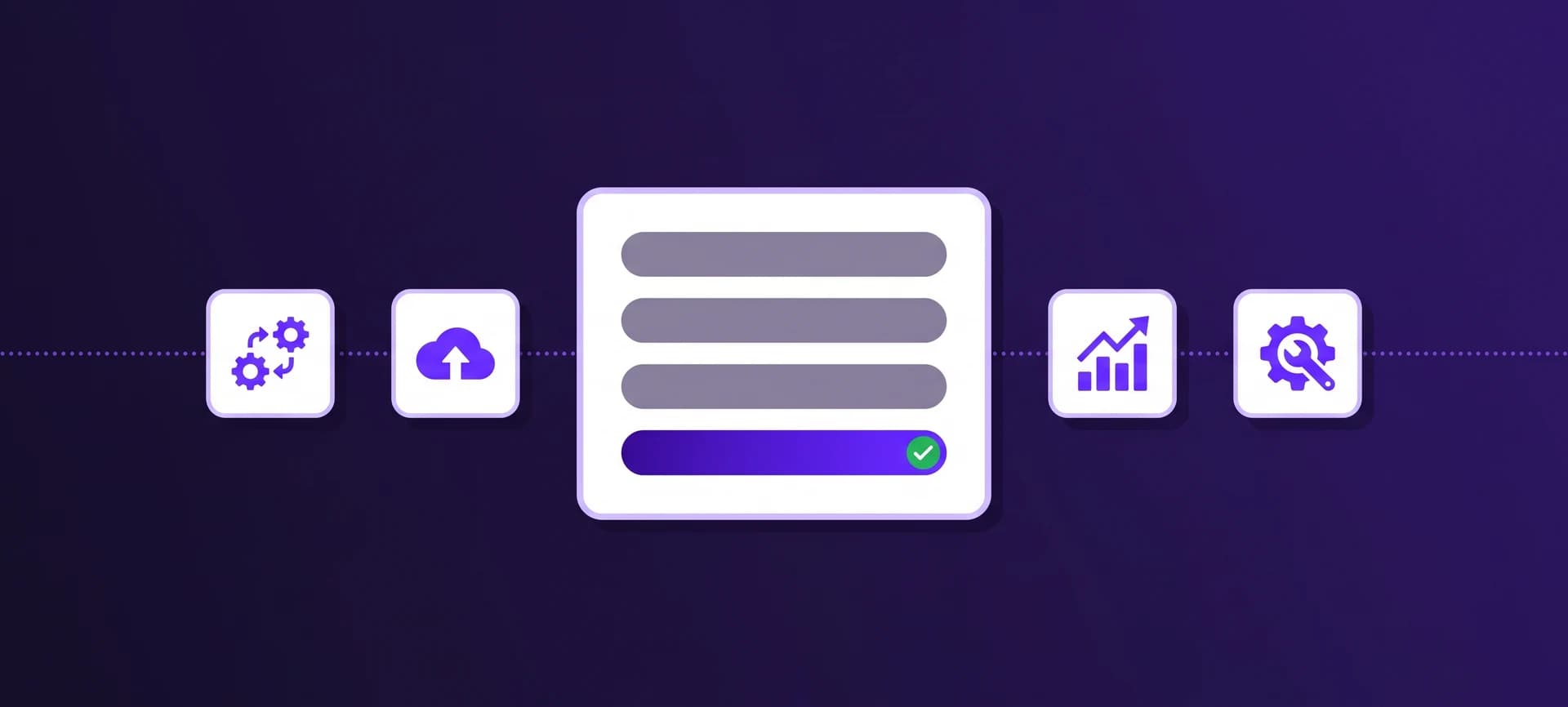
AI customer service software answers your customers' routine questions automatically, from your own information, and passes the conversation to a person when it needs one. Nearly all of it is designed and priced for support teams that already run a helpdesk, with agents, tickets and queues to move work between, and most "best customer service software for small business" lists are the same helpdesks ranked by price per seat. This guide is written for the more common buyer: the business where nobody has "support" in their job title, and where the software has to be the entire front desk rather than a layer on top of one. It covers the four kinds of tool on the market, what each pricing model really costs you, and what to check before you commit.
Ultimo Bots is AI customer service software for businesses that do not run a support desk: one AI agent that answers from your own content around the clock on your website, Messenger, Instagram, Telegram and Slack, captures leads, hands the conversation to a human in the same window, and connects to Zapier, Make or n8n so the work behind an answer runs on its own.
What customer service software for small business has to cover
Every comparison guide on this topic starts from the same picture: a queue of tickets, a team working through it, and AI added on top to reduce the volume. Search for help desk software for small business and you get the same picture at a smaller price point, Freshdesk, Zoho Desk, Help Scout and their peers ranked by cost per agent seat. Remove one element from that picture, the team, and most of the reasoning stops applying. There is no queue to deflect from and no agent whose hours you are saving.
Three jobs need covering instead, and none of them is deflection.
- The hours nobody works. Most enquiries that go cold arrive in the evening, at the weekend, or while you are already with a customer. Nothing routes them anywhere. They simply sit until they are stale.
- The same fifteen questions. Price, availability, delivery time, what is included, whether you cover a particular area, how to get started. Answering them is not difficult. It is relentless.
- The step after the answer. A reply that ends with "so how do I book?" and then silence is a lost sale, not a resolved ticket.
So the yardstick for an AI agent for customer service is not tickets deflected or first-response time. It is simpler and harder: did somebody get a real answer at 22:40, and did their details reach you in a form you could act on the next morning.
The four kinds of AI customer service software
AI agents for customer service now cover four quite different products, and most "best AI customer service software" lists mix all four into a single ranking, which is why they read as contradictory. The AI customer support software sold to a team and the standalone agent sold to a one-person business share a category name and almost nothing else. Sorting them by what each one assumes about you makes the choice obvious.
| Kind | What it is | It assumes you have | Worth it when |
|---|---|---|---|
| Helpdesk add-on | An AI layer inside a ticketing suite | A helpdesk, agents, and seats to license | You already pay for the helpdesk |
| Agent assist | Drafts and summaries for human agents | People answering messages all day | Your staff are the bottleneck |
| Voice agents | Software that answers phone calls | Real phone volume worth automating | The phone is your main channel |
| Standalone AI agent | Answers customers directly, on your site and in your channels | A website and content worth answering from | Nobody is staffing an inbox |
The first two categories are the bulk of what ranks for this term, and both are priced as an upgrade to a system you are assumed to already own. If you do not own one, you are buying the helpdesk in order to buy the AI.
Conversational AI for customer service in the fourth sense is a different purchase. It is not improving a support process. It is the first one you have ever had.
How much does AI customer service software cost?
The sticker price matters far less than the pricing model, because the model decides whether the tool gets cheaper or more expensive as it works better.
- Per seat. You pay for each staff login. A business with one and a half people pays for a structure it does not have, and the price is unrelated to how much work the AI does.
- Per resolution. You pay each time the AI settles a conversation. It reads fairly, and it means a good month costs more than a bad one. Budgeting is guesswork until you have a few months of history.
- Per ticket. Inherited from helpdesk pricing. It quietly assumes every conversation becomes a ticket, which is exactly the thing you are trying to avoid.
- Per message volume. A flat monthly price for a capacity band. Predictable, and it does not punish the assistant for being useful.
For a business without a support desk, only the last one prices what you are actually buying. Ultimo Bots is public about it rather than hiding it behind a demo request:
| Plan | Monthly | Yearly (per month) | Included conversations |
|---|---|---|---|
| Smart | $29 | $19 | 500 messages |
| Boost | $59 | $39 | 2,000 messages |
| Ultimo | $149 | $99 | 10,000 messages |
Every plan includes every channel, every app action, live chat handoff, lead capture and analytics. There are no per-seat charges, because you are buying the agent rather than the seats. Each plan starts with a 7-day free trial, and the full breakdown is on the pricing page.
Free AI customer service tools exist, and they are usually a trial or a small monthly credit allowance, because every answer costs the provider real money to generate. A permanent free tier that answers meaningful volume is rare enough to be worth reading the fine print on.
What to check before you buy
Most AI tools for customer service demo well. These six checks are ordered by what actually decides whether one works, rather than by the order vendors present features in.
- Where the answers come from. An AI powered customer service platform is only as good as what it reads. Check that it takes your actual sources: your website, your documents, your knowledge files, and that it re-reads them when they change. Answers assembled from general internet knowledge will be confidently wrong about your prices.
- What happens when it does not know. The right behaviour is to say so and offer a person. Test this deliberately before buying, by asking something your content does not cover.
- Whether it captures anything. An assistant that answers beautifully and collects nothing is a cost centre. It should be able to take a name, an email and the actual request, and notify you immediately.
- Which channels it covers. Your customers do not all arrive on your website. If the same agent cannot answer in the places they already message you, you have bought a widget rather than a service.
- What it can trigger elsewhere. See the section below. This is the difference between answering and doing.
- How you get out. Your knowledge base should remain yours, and cancelling should not require a phone call.
Where the answer stops and a person takes over
The most common complaint about customer service AI agents is not that they answer badly. It is that there is no way past them. People have learned to type nonsense at automated systems purely to reach a human, which tells you how those systems are usually built.
Automation with no exit turns a mildly annoyed customer into a former one, so the handoff is a feature rather than a fallback. In Ultimo Bots the option to reach a person appears in the same chat window as soon as a member of staff is online, and the conversation continues in place with its full history. Nobody re-types their question, and no channel switch happens. While a person is replying, the AI stays alongside to suggest wording and to translate between languages, which is what makes a one-person business able to answer a customer writing in French. How that inbox works is on the live chat page.
Software that does the work, not just the talking
Answering is half the value. The other half is what happens after, and it is where most AI customer service tools stop.
Through app actions, the agent can pass what it collected into the systems you already run. Contacts can go to HubSpot or Mailchimp, booking links can come from Calendly or Cal.com, and store and billing lookups can run against Shopify, Wix or Stripe. Anything with a private detail attached is protected by an email verification step first, so a visitor can only ever see their own order or their own invoice.
Beyond the direct connections, the agent can post what it gathered to a Zapier, Make or n8n workflow, which means practically any routine flow you handle by hand today can run end to end. Make and n8n can also return a result into the same reply through their webhook response and webhook node features, so the agent can answer with real data from your own systems. Zapier is send-only, so treat it as a way to start work rather than to look things up.
In practice that looks like this:
- A quote request at 23:00 becomes a CRM record, a task assigned to you, and a confirmation email to the customer, before anyone reads it.
- A callback request becomes a row in your spreadsheet and a message in your team channel.
- An eligibility question ("do you deliver to this postcode?") gets checked against your own data and answered in the conversation.
The same agent, with the same knowledge, answers on your website, through a shareable chat link, and in Facebook Messenger, Instagram DMs, Telegram and Slack. One place to update, every channel current.
How to tell within a month whether you chose right
Three signals you can read yourself, without interpreting a dashboard.
- The share of conversations that ended without you. If it is not rising, the problem is usually thin content rather than a weak model. Check what people asked, not which tool you bought.
- Where the handoffs cluster. Five conversations a week stalling on the same question is a missing page. It takes ten minutes to fix and it compounds.
- Captures outside your working hours. Enquiries recorded between closing and opening are revenue you were previously losing without ever seeing it.
Getting to that point takes an afternoon: point it at your website, let it read, then read the first twenty real conversations and fix the two answers that were thinner than you expected. Almost everyone skips that last step, and it is the one that does most of the work.
Have a look at how the knowledge base turns your existing pages into answers, what app actions can trigger in your other tools, and how leads and analytics show you what people actually asked.