

An AI chat agent is chat software that does more than answer: it reads your own content, works out what a visitor actually needs, and then does something about it, whether that is capturing the enquiry, sharing a booking link, or looking up an order. The term is new, the market around it is noisy, and half of what ranks for it is either an enterprise glossary or a phone app. This guide is the practical version for a small business website: what a chat agent is, what one can do today, what it costs, and how to get one live in an afternoon.
Ultimo Bots is an AI chat agent for any website: it answers from your own content around the clock on your site, Messenger, Instagram, Telegram and Slack, captures leads, books appointments, looks up orders, hands the conversation to a human when it should, and connects to Zapier, Make or n8n so the work behind an answer runs on its own.
The difference between a chatbot and an AI chat agent
For years, the software behind a website chat window was a chatbot in the literal sense: a menu of buttons, a script of prepared replies, and a dead end the moment a question fell outside it. The word stuck, but the products have moved on twice since. First came the AI chatbot, which generates answers from your content instead of matching keywords. The chat agent is the step after that: the same conversation window, plus the ability to decide and act.
| Scripted chatbot | AI chatbot | AI chat agent | |
|---|---|---|---|
| Understands free text | Keyword matching | Yes | Yes |
| Answers come from | Prepared scripts | Your content | Your content |
| Off-script questions | Dead end | Answered | Answered, then back to the task |
| Takes action | No | Rarely | Books, looks up, captures, notifies |
| When it is unsure | Loops | Guesses or stops | Says so and offers a person |
The distinction is not academic. A tool that answers "do you take Saturday appointments?" correctly and then cannot book one has done half the job. An agent completes it: it checks the question against your services, shares the booking link or takes the booking, and records who asked. You will see the same idea sold as conversational AI, a virtual agent, or an AI customer support agent. The label matters less than the test: can it take a real action on your behalf, and does it know when to stop and fetch you.
What an AI chat agent does on a small business website
The useful way to judge a chat agent is by outcomes, not features. Four cover most of what a small business needs.
It answers from what you already wrote. Point it at your website, your documents, and files from Google Drive, OneDrive or Notion, and it answers from that material rather than from general internet knowledge. When your pages change, it re-reads them, so the answers follow your content instead of drifting away from it. How that works is on the knowledge base page.
It captures the enquiry. A name, an email and the actual request, plus any extra detail you want collected, arrive in your inbox the moment the conversation ends up somewhere useful. The visitor who asked for a quote at 23:00 is a recorded lead by 23:01, not a mystery in your traffic stats.
It takes the next step. Through app actions the agent shares Calendly or Cal.com booking links, creates Stripe payment links, saves contacts to HubSpot, subscribes newsletter signups to Mailchimp, and on Wix and Shopify stores it searches your products in the chat; on Wix it also looks up orders with live tracking. Anything that touches one customer's private data, an invoice, a subscription, an order, sits behind an email verification step first: the visitor proves the address with a one-time code and can only ever see their own records.
It knows what it is allowed to do. You build these skills by instructing the agent in plain language in the AI Studio, and you can give it standing rules it must follow for a topic, like always asking for a reason before cancelling a plan. There is no flowchart to maintain. Read more on the AI Studio page.
Where it works, and what it connects to
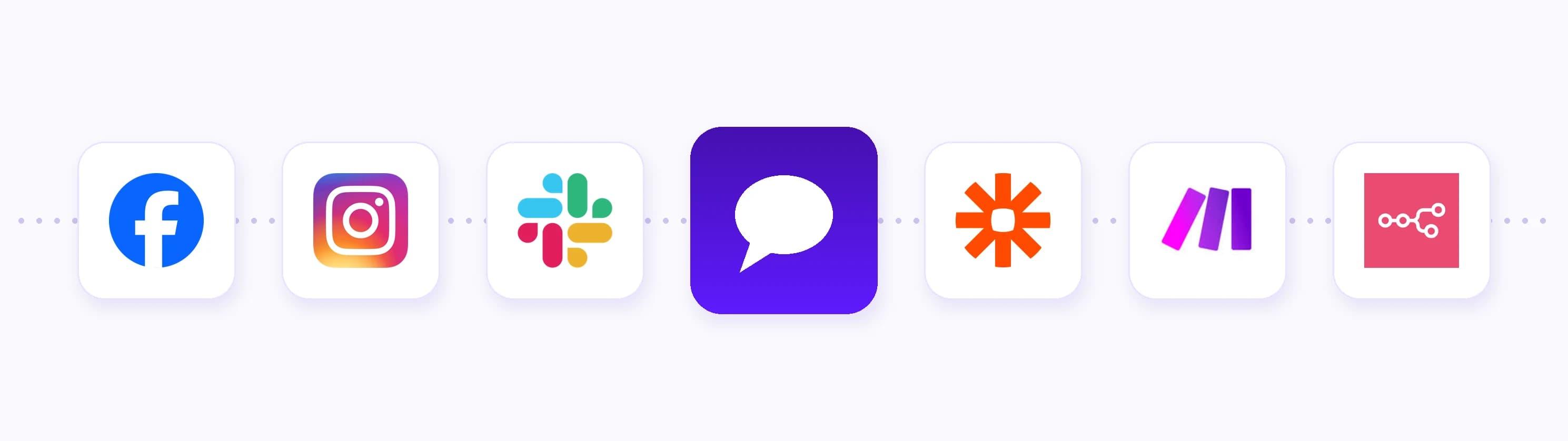
An AI agent for your website should not stop at the website itself, because your customers do not. The same agent, with the same knowledge, answers on your site, through a shareable chat link, and inside Facebook Messenger, Instagram DMs, Telegram and Slack. You update your content once and every channel is current. The Meta channels run through Ultimo Bots as a verified Meta Tech Provider, and the whole thing works on any website, no matter which builder or stack it runs on.
Beyond the direct app connections, the agent can post whatever it collected to a Zapier, Make or n8n workflow. That one webhook covers practically any routine flow you handle by hand today: a quote request becomes a CRM record and a task, a callback request becomes a row in a spreadsheet and a message in your team channel. Make and n8n can also return a result into the same reply through their webhook response and webhook node features, so the agent can answer with live data from your own systems. Zapier is send-only, so use it to start work rather than to look things up.
How much does an AI chat agent cost?
Most of the confusion here comes from one word covering two products. ChatGPT agents are a feature of ChatGPT's paid personal plans, priced per user per month: an assistant that browses and does tasks for you. An AI chat agent for a website is a different purchase. It talks to your customers, not to you, and it is priced by conversation volume rather than by seats.
For that second kind, the honest market range for a small business runs from roughly $20 to $100 a month, with enterprise platforms far above that. Ultimo Bots is public about where it sits rather than hiding the number behind a demo call:
- Smart at $29 a month ($19 on yearly billing) with 500 messages included
- Boost at $59 ($39 yearly) with 2,000 messages
- Ultimo at $149 ($99 yearly) with 10,000 messages
Every plan includes every channel, app actions, live chat handoff, lead capture and analytics, and starts with a 7-day free trial. There are no per-seat charges, because you are buying the agent, not seats. The full breakdown is on the pricing page.
When the agent hands the chat to you
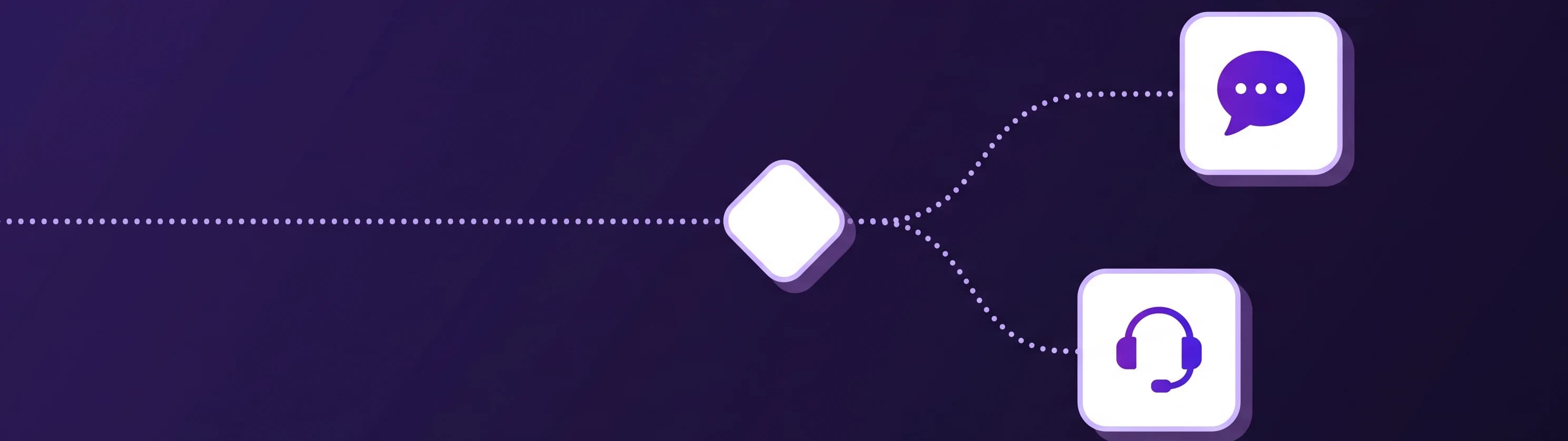
Part of what makes an agent an agent is knowing the limits of its authority. Some conversations should reach a person: the complaint that needs judgement, the deal worth closing personally, the question your content genuinely does not answer. The wrong behaviour is to loop; the right behaviour is to say so and fetch you.
In Ultimo Bots the option to reach a person appears in the same chat window whenever a member of staff is online, and the conversation continues in place with its full history, so nobody re-types anything. While you reply, the AI stays alongside to suggest wording and translate, which is how a one-person business answers a customer writing in French. The widget also discloses that it is AI on its own, which is what Article 50 of the EU AI Act expects of a customer-facing assistant. Details are on the live chat page.
Getting one live in an afternoon
- Connect your content. Your website address, plus any documents or Drive, OneDrive and Notion files worth answering from. Reading them takes minutes.
- Ask it twenty real questions. The ones customers actually send you. Fix the two answers that come back thinner than you expected, in plain language, and retest.
- Give it one job beyond answering. Tell the AI Studio in a sentence what to do: collect a name, an email and the project details, then email me and add the contact to HubSpot. That single skill is usually where the tool starts paying for itself.
- Turn on your channels. The website widget with your colors and logo, then Messenger, Instagram, Telegram or Slack as they apply to you.
- Read the first week of conversations. Ten minutes. The questions people ask when they think nobody is watching are the best content plan you will ever get, and the enquiries captured after closing time are revenue you were previously losing unseen.